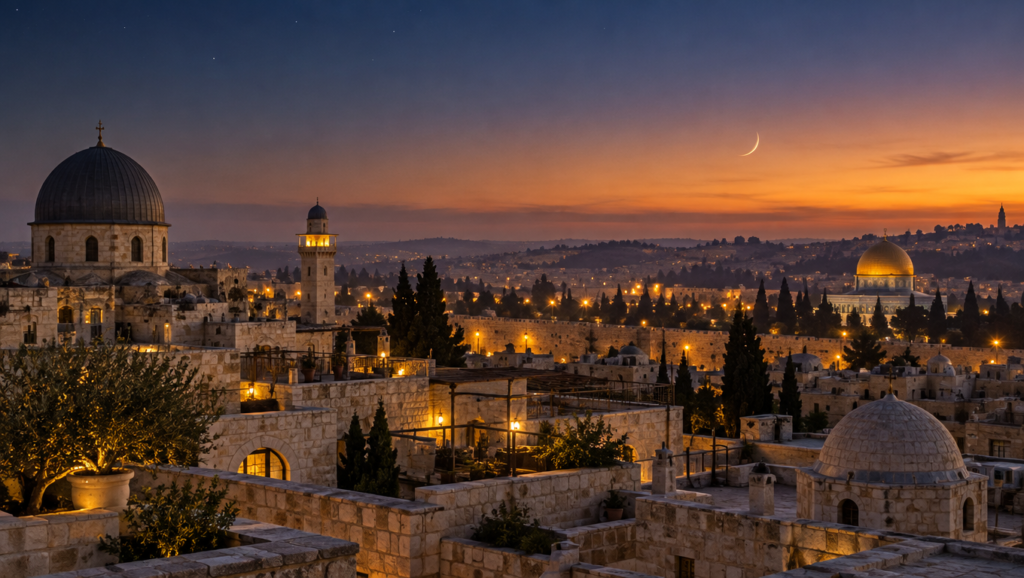
By Roddy Carlo, founder of FEDIYAR and Eternal Clock
A personal reflection on ancient calendars, the art of counting our days and the birth of Eternal Clock.
Teach us to count our days well
Someone once said: “Teach us to count our days well.” In a world where you can acquire everything except the next hour, this sentence is almost a definition of luxury. It raises two questions: knowing since when we have been counting, and knowing what we do with our days. If every asset is a domain, time is the one that all the others presuppose.
I am passionate about history, and even more about the history of the calendar and the Moon in Antiquity. That is what led me to Joseph Justus Scaliger.
Scaliger, between France and Italy
Born in Agen in 1540 and died in Leiden in 1609, Scaliger was French by birth and of Italian origin through his father, the physician and scholar Julius Caesar Scaliger. It was this father who taught him Latin. Joseph went on to study Greek, Hebrew and Arabic, then took an interest in several other Oriental languages.
A founding figure of modern chronology, he made astronomy an instrument of historical comparison. His De emendatione temporum (1583), “On the Emendation of Times”, compares the calendars of the Ancients in order to bring together their different ways of dating events.
The age of the world according to Scaliger
In Book V, Scaliger holds 2,453 years from the Creation to the Exodus, then 907 years to the capture of Jerusalem under King Zedekiah, making 3,360 years “precisely”. He comes down in favor of a beginning of the world in autumn, then places that first year in his own chronological scale, the Julian Period: the Exodus falls in year 3,217, and the first year of the world in year 764, that is 3950 BC.
From this starting point, and taking into account the absence of a year zero, the world reaches 5,975 completed years in autumn 2026 and enters its 5,976th year. The aim here is to restate a historical chronology based on the ancient texts available in his time.
Another landmark in his reasoning leads to the same result: Scaliger criticizes the chronology of Constantinople, which places the Creation in 5509 BC, for exceeding by 1,559 years the limits he holds. The subtraction does give: 5,509 − 1,559 = 3,950.
Applying this chronology to the calendar based on the visibility of the first crescent that I am developing, my algorithm places this change of year on 13 October 2026, with Jerusalem as the reference. This precise date comes from my calculation model, whose parameters I will not detail in this article.
How many days in a lunar month?
Counting months is a duel with the sky. The lunar month, measured from one new moon to the next, lasts on average about 29.530588 days, that is 29 days, 12 hours, 44 minutes and 3 seconds. But each lunation departs slightly from this average.
Yet a calendar counts whole days: a lunar month generally has 29 or 30 days. In several calendars of Antiquity, observation of the sky settled the matter: the new month began at sunset, on the evening when the first thin crescent of the Moon was seen.
This difference between an average duration and an observable appearance is at the heart of my research. An astronomical phase can be calculated; the visibility of a crescent also depends on the place and on the conditions of observation.
The luxury of longevity
Learning to count our days well also means wishing to have more of them. Longevity has become one of the most coveted luxuries: clinics, check-ups, protocols. This quest leads me to look also at what gives our days their rhythm.
I believe that the Creator inscribed in nature cycles to which we can pay more attention: the alternation of day and night, the seasons, the return of the Moon. The week, for its part, organizes another rhythm, without corresponding directly to an astronomical cycle.
These rhythms invite us to look at our habits differently: the place of rest, the regularity of our days, our relationship to light and to the seasons. They also give another depth to a familiar question: what do we do with the time we have?
My interest in the lunar cycle belongs to historical, astronomical and spiritual research. I do not attribute to it here a demonstrated effect on longevity. But I question the way we inhabit time: do we devote as much attention to our days as to the possessions we acquire?
Eternal Clock: a research project, from the algorithm to the watch
The algorithm that places this change of year on 13 October is at the heart of Eternal Clock, a research project whose ambition is to create a watch.
To begin with, it seeks to predict the visibility of the first crescent of the Moon from Jerusalem, using the DE440 ephemerides of NASA’s Jet Propulsion Laboratory. The place matters: a crescent may be visible from one spot and not from another. Atmospheric conditions can also make the actual observation differ from the prediction.
Why Jerusalem?
An ancient text says of Zion: “All were born there”, evoking in particular Egypt and Babylon. This image of a place that gathers the peoples nourishes my reflection.
Jerusalem is a holy city for Jews, Christians and Muslims. In these three traditions, the Moon plays a part, in different ways, in the religious calendar.
In the ancient Jewish calendar based on observation, the beginning of the month was proclaimed on the testimony of those who had seen the crescent. Muslims traditionally begin their months by observing it, even though some authorities now rely on calculation.
For Christians, the determination of Easter has also kept a close link with the lunar calendar and the month of Nisan. Over the centuries, methods of calculation developed in order to establish a common date. The paschal full moon thus became a calendar reference, which does not necessarily coincide with the instant of the astronomical full moon.
In 1997, an ecumenical consultation held in Aleppo proposed determining the date of Easter from precise astronomical data, taking the meridian of Jerusalem as the reference.
For my project, Jerusalem is therefore a reference point that is at once geographical, historical and spiritual.
Why a watch?
Because fine watchmaking already knows how to represent the movements of the sky with remarkable precision. Displaying the phases of the Moon is a fascinating expression of it: translating a celestial movement into a mechanism worn on the wrist.
Displaying a lunar phase and predicting the visibility of the first crescent nevertheless remain two different functions. The second requires taking into account the observer’s position and the geometry of the local sky. It is this question that fuels Eternal Clock’s research ambition.
Refusing to round too quickly, not settling for 29.5 days when the average is 29.530588: for me, that is an expression of the luxury of time. An attention paid to what is greater than us, down to its details.
It is also a way of thanking the Great Creator of the universe for his blessings: life, health and so many others. Especially on the evening when the first crescent appears, discreet in the sky, like a wink from the Creator.
Supporting the research
FEDIYAR also contributes to this ambition: the revenue from its services — presentation of assets, Studio films and immersive pages — is intended in particular to finance Eternal Clock’s research.
Those who wish to support the project directly can also discover its support plans, designed to advance the calendar and the research around a future watch.
Discover Eternal Clock and support the project →
Time is the only domain that no asset can replace and that no fortune can enlarge. We can only learn to inhabit it, and, if we are curious, to count it with precision.


